
Accelerating Results for Healthcare Brands Through Advocacy, Materials Science Expertise and Integrated Packaging Capabilities
Written by Chris Johnston
Senior Account Executive, Cartons & Labels
Background
Any change to packaging design for an approved pharmaceutical product is a time consuming, detail-oriented effort, even with small brand-driven changes–so when governments update packaging regulations on a larger scale, a company’s entire product line could be impacted, creating change management projects for sometimes hundreds of items. What’s more, if updated regulations introduce new requirements for packaging, this not only adds another layer of complexity, but also presents a significant challenge to any organization given the significant internal resource time and workload necessary to manage changes at this scale.
That’s why when Health Canada introduced amendments to the existing Food and Drug Regulations (Labelling, Packaging and Brand Names of Drugs for Human Use) for non-prescription, over-the-counter (OTC) drug products in 2014, pharmaceutical organizations selling products in the Canadian marketplace knew they had a significant challenge to overcome.

The government implemented this new guidance, known as Plain Language Labelling regulations or PLL, to improve the safe and effective use of non-prescription drugs by making packaging easier to read and understand. The regulations include new requirements for what information is included on outer packaging and how the information should be formatted.
While there are several staged implementation periods, the overall compliance deadline for all OTC products at the retail level is June 30, 2021.1 This means there is not only a high volume of packaging to redesign, but also a tight timeline to complete the necessary changes.
With this in mind, a large, Multi-National Pharmaceutical Company engaged with Jones Healthcare Group to develop and implement a turnkey packaging solution that would provide full compliance to the new Health Canada PLL regulations well in advance of the deadline.
The client, an OTC product market leader, was tasked with updating every consumer health product they sold in Canada, including over 150 different stock keeping units (SKUs). The magnitude and scope of this project required a strategic partnership with a packaging leader to ensure the client not only met the new government regulations, but also adhered to all of their existing product and quality requirements.
With every product in the Canadian marketplace impacted, the client knew completing the project right the first time was non-negotiable. Any disruptions or slowdowns during the project could impact their retail shelf presence and potentially damage their highly respected brand.
“A large, Multi-National Pharmaceutical Company engaged with Jones Healthcare Group to implement a turnkey packaging solution.”
Challenges
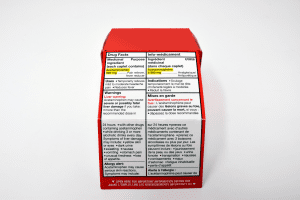
PLL requires changes to existing packaging (folding cartons and/or pressure sensitive labels) to better serve the consumer with easy-to-understand language in French and English, as well as a new Canadian Drug Facts Table (CDFT). This presented a number of challenges:
- This was far more information than what current OTC packages could accommodate at their existing size.
- SKUs varied by dosage forms, quantity, primary and secondary packaging, and therapeutic area, each with their own unique packaging requirements and timeline to maintain an unaffected retail shelf presence.
- Solutions would have to continue to meet all existing product and quality requirements.
- The client would have to mitigate cost increases as much as possible.
- Solutions would have to minimize the impact on existing packaging line configurations and their overall operational efficiency (OEE).
- PLL-compliant information had to remain legible for the life of the product, even after purchase, or risk being recalled by regulatory authorities.
- The client wanted to be one of the first to deliver compliant products to Canadian consumers, while recognizing the potential risk to brand image and consumer trust if any errors occurred, especially those resulting in non-compliance or a product recall. There was no room for error considering the number of products the client had to transition.
Results
Over a period of three years, each and every product was delivered in accordance with the agreed project timelines in full compliance with Health Canada’s new PLL regulations. The client was among the first consumer health companies to have compliant product available for Canadian consumers.
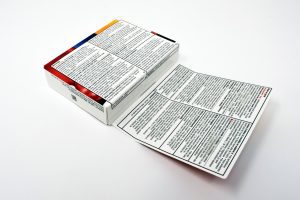
Using 50 different complex, resealable multi-panel cartons, the client was able to include the additional PLL information on packaging without increasing retail shelf footprints, while also mitigating impact to the supply chain. Being one of the first to market, and enabling consumers and patients to make empowered and informed decisions about their health through this new packaging, further reinforced the client’s position as a market leader.
Four Critical Components of Success
1. Early Alignment With Regulatory Bodies
Shortly after the announcement of the proposed new regulations, Jones quickly engaged with the Food, Health & Consumer Products of Canada (FHCP) association, which acts as the voice of Canada’s leading food, health and consumer products manufacturers.3 As a leading packaging organization in the North American market, Jones worked with FHCP to provide critical insight to Health Canada on how proposed regulations would impact pharmaceutical packaging.
This included how regulations could negatively impact collective goals on sustainability (increased materials, shipping costs), the availability of pharmaceutical compliant converting capacity required for on-time compliance nationwide, and the overall complexity of the change process required (design, test, validate, cost and ultimately time).
Health Canada rewarded this leadership and advocacy by including new key recommendations in the official PLL regulations. Companies now had additional flexibility regarding the addition of multiple panels, the positioning and implementation of the required bilingual copy and a streamlining of the approval process. This close alignment with the FHCP and Health Canada allowed Jones to bring multiple innovative solutions to the client’s attention at the very start of this comprehensive project.
2. Decision to Use an Innovative Carton Design
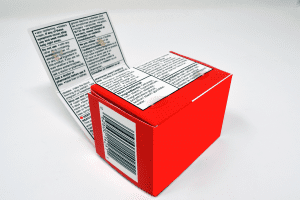
Multiple solutions were presented to the client that included: (i) increasing the size of the current carton, (ii) adding a traditional fifth (hanging) panel, (iii) incorporation of wrap-around multi-panels (up to three), (iv) multiple versions of multi-ply or extended content, pressure sensitive labels and (v) a combination solution of a folding carton and pressure sensitive label used together.
The client decided to proceed with the wrap-around multi-panel carton solution to maintain the same retail shelf space footprints and avoid increased costs for retail display, while also providing the best canvas for brand marketing.
By aligning scope through a single solution platform early in the project instead of multiple parallel project paths, Jones and the client reduced unnecessary complexity, focused project team resources, optimized communication channels and accelerated deliverables.
“The client was among the first consumer health companies to have compliant product available for Canadian consumers.”
3. Rigorous Defining and Testing of Critical to Quality (CTQ) Attributes
To address both their existing internal and newly legislated external requirements, the client developed a comprehensive list of CTQs. Through its strong partnership with the client, Jones could design and implement an innovative solution that met or exceeded all of these CTQs.
One of the most critical CTQs required the carton to maintain integrity when the new additional carton panels were opened and closed by consumers – in other words, the carton could not experience any fibre tear and had to maintain the clarity and legibility of the PLL-required text during the full lifecycle of the product.
The issue of “resealability” for consumers was also critical. The carton had to withstand opening and closing cycles prior to purchase in-store as well as at home when consumers read key information such as the drug facts table and instructions for use and storage.
This CTQ required a deep understanding of how the various elements of the folding carton work and interact. Our technical team had to develop, design and test for the right combination of substrate, coatings, inks and adhesives that not only met the resealability requirement, but also met the established CTQs for the currently used cartons.
The Jones technical team designed a solution following extensive prototype testing to achieve all CTQ parameters and commercial repeatability. This included exhaustive transportation testing using Jones’ alliance with the Canadian Centre for Product Validation (CCPV)2, specifically designed to simulate various climate fluctuations within Canada while stressing the carton designs and components (ink, adhesive, substrate) as the added panels were repetitively opened and closed. The results were ideal – the cartons experienced zero fibre tear with no adulteration of the printed text.
The folding carton design team’s knowledge in material science and how various carton elements interact was invaluable in providing this solution, while the extensive testing process validated the design work and allowed the project to quickly move forward to iterative filling line trials.
“Our technical team had to develop, design and test for the right combination of substrate, coatings, inks and adhesives that not only met the resealability requirement, but also met the established CTQs for the currently used cartons.”
4. Vertically Integrated Capabilities
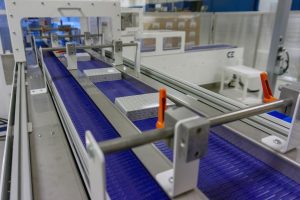
While the new multi-panel carton designs provided the client with a solution that met all of their existing quality requirements and new PLL regulations, the extra panels were still “new” to the packaging supply chain and had not been used on traditional packaging filling equipment in the past. The need to test and validate the designs across the automated packaging process was critical to the project’s success.
Fortunately, Jones offers both packaging design, printing and conversion through its Cartons & Labels business unit and a range of packaging filling and assembly services through its Packaging Services business unit. Given the client already worked closely with both business units, this meant the client could strategically benefit from Jones’ vertical integration. As new carton designs were generated during ideation and prepress planning stages, both business units could evaluate cartons quickly, thereby providing extensive expertise, knowledge and design refinement before any metal was cut and prototypes were made.

“Fortunately, Jones offers both packaging design, printing and conversion through its Cartons & Labels business unit and a range of packaging filling and assembly services through its Packaging Services business unit.”
With this vertical integration, the business units could clearly communicate project timelines and key milestones with one another and the client. This visibility allowed the Packaging Services team to proactively plan the iterative packaging line trials to validate carton durability and processability with commercial packaging equipment, all while maintaining the flexibility needed in their production schedule. This agility also meant commercial operations continued unaffected while line trials were completed.
This seamless connection saved valuable time and resources, accelerating testing, validation and ultimately product design approvals. The Packaging Services team was able to confirm the new carton designs had no negative impact on filling line speed, allowing the client to expand the use of the new carton design across their network with confidence.
Summary
The consumer health division of a large Multi-National, Global Pharmaceutical Company engaged Jones Healthcare Group for assistance in complying with new Health Canada regulatory requirements, PLL, for outer packaging of over-the-counter, non-prescription drug products.
The complex project involved the packaging of more than 150 SKUs, using 50 different innovative multi-panel designs that complied with new PLL regulations, while meeting key quality and processing requirements.
Jones achieved success by engaging with regulatory bodies as a subject matter expert when regulations were introduced, aligning project teams on a solution platform early in the project, defining and vigorously testing against newly defined critical-to-quality attributes and leveraging the vertical integration of the company’s Packaging Services and Cartons & Labels business units.
To read more about Jones Healthcare Group’s integrated packaging solutions, download the PDF version.
About the Author Chris Johnston
Chris Johnston is Senior Account Executive for the Cartons & Labels business unit of Jones Healthcare Group. Over his 13 years with Jones and over 20 years in the packaging industry, Chris is adept at quickly understanding his customer’s complex problems and providing innovative solutions that exceed their expectations.
-
Government of Canada, Health Canada, Guidance Document: Labelling Requirements for Non-prescription Drugs, Plain Language Labelling (PLL) Initiative. -
Canadian Centre for Product Validation (CCPV) is located in London Ontario. It is a 25,000 square-foot center, housing leading-edge validation technologies and equipment for prototyping and testing in one central location, with full developmental multimodal capabilities under one roof for cost-effective results. -
FHCP is the voice of industry on many issues of importance to Canadians including food and product safety; helping to bring innovative products to market including healthier-for-you options; promoting environmental stewardship; product labelling and working to ensure the competitiveness of our industry so that Canadians have choice and ready access to world-leading safe and innovative products. FHCP | Food Production | Food Manufacturers In Ontario
